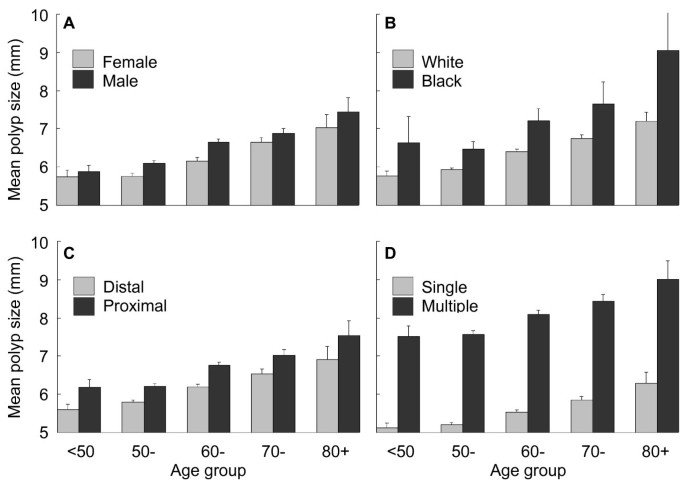
Colon Polyp Size Chart . The size of a colonic polyp is a biomarker that correlates with its risk of malignancy and guides its clinical management ().the risk of malignancy increases with increasing polyp size ().the relationship of polyp size and risk of malignancy was originally reported in the pathology and surgery literature; The detection rate of adenoma is the most important indicator of colonoscopy, and the complete resection of polyps.
Types Of Colon Polyps: Colon Polyp Symptoms And Risk Factors from healthblog.uofmhealth.org
Polyp with a stalk between the polyp and the colon wall. Colonoscopy checks the colon for hidden signs of cancer, called polyps. As we all know, colonoscopy is the best way to find and deal with precancerous lesions of the colon.
Types Of Colon Polyps: Colon Polyp Symptoms And Risk Factors
Colon polyp size chart polyps appear as an irregularity of the surface of the colon when it is being examined by the doctor performing the colonoscopy, cancer risk, while the majority of colon cancers start as polyps, “a diminutive polyp is only about the size of a match head,. Most polyps do not typically cause symptoms, and. As we all know, colonoscopy is the best way to find and deal with precancerous lesions of the colon. Polyp that has a thickness that is less than that of the surrounding colon wall.
Source: www.mdpi.com
Different types of polyps look different under the microscope. If polyps do grow to a large size, symptoms such as diarrhea, constipation or rectal bleeding may occur. Colon polyp size chart report. As we all know, colonoscopy is the best way to find and deal with precancerous lesions of the colon. The size of a polyp typically does make a.
Source: www.roswellpark.org
Most colon polyps are small and do not cause symptoms, explains webmd. Polyps are growths that could eventually develop into tumors, though relatively few do. A polyp is a projection (growth) of tissue from the inner lining of the colon into the lumen (hollow center) of the colon. When raised they can resemble small bumps (called sessile), or even grow.
Source: journalsblog.gastro.org
The size, site, morphology and histology of these polyps is shown in [table 1][1]. Polyp that has a height that is less than one half the diameter of the polyp. Most polyps do not typically cause symptoms, and. The size of a polyp typically does make a difference. Polyp that has a thickness that is less than that of the.
Source: www.gastrojournal.org
The detection rate of adenoma is the most important indicator of colonoscopy, and the complete resection of polyps. Research has shown the larger a colon polyp becomes, the more rapidly it grows. The average polyp may be 1/4 inch in diameter and 1/2 inch in length. If polyps do grow to a large size, symptoms such as diarrhea, constipation or.
Source: pubs.rsna.org
A colon polyp is a small growth on the inner lining of the large intestine, some of which can progress into cancer. Polyp that has a thickness that is less than that of the surrounding colon wall. Polyp that is 5mm or less in diameter. A polyp is a projection (growth) of tissue from the inner lining of the colon.
Source: www.researchgate.net
The size of a polyp typically does make a difference. Polyp that has a thickness that is less than that of the surrounding colon wall. The detection rate of adenoma is the most important indicator of colonoscopy, and the complete resection of polyps. Some colon polyps can develop into colon cancer, which is why the mayo clinic recommends regular screening.
Source: www.researchgate.net
86.6% of all polyps were non pedunculated and 56.3% polyps were located in the left colon and rectum. The larger the polyp becomes, the bigger the risk of it developing into colon cancer. But they also have the nasty habit that they degenerate in the base where they are attached to th. Polyp with a stalk between the polyp and.
Source: onlinelibrary.wiley.com
Polyps may be scattered throughout the colon and vary in size from a few millimeters to several centimeters. 86.6% of all polyps were non pedunculated and 56.3% polyps were located in the left colon and rectum. Polyp that has a thickness that is less than that of the surrounding colon wall. Most colon polyps are small and do not cause.
Source: www.verywellhealth.com
The size of a polyp typically does make a difference. Most colon polyps are small and do not cause symptoms, explains webmd. If polyps do grow to a large size, symptoms such as diarrhea, constipation or rectal bleeding may occur. The detection rate of adenoma is the most important indicator of colonoscopy, and the complete resection of polyps. Polyp that.
Source: bmcgastroenterol.biomedcentral.com
Polyps may be scattered throughout the colon and vary in size from a few millimeters to several centimeters. Polyp that has a height that is less than one half the diameter of the polyp. A histopathological diagnosis of polyp cancer was made in 104/15906 polyps (0.65%). The doctor removes polyps during a colonoscopy. Polyps growth slowly in diameter and in.
Source: www.researchgate.net
Polyps are growths that could eventually develop into tumors, though relatively few do. Previous studies using artificial colon models with polyps have reported rates accuracy for endoscopic polyp size measurements ranging between 25 % and 60 % 12 13. Different types of polyps look different under the microscope. When raised they can resemble small bumps (called sessile), or even grow.
Source: www.hindawi.com
Polyp that has a thickness that is less than that of the surrounding colon wall. Polyps may be scattered throughout the colon and vary in size from a few millimeters to several centimeters. Our knowledge later expanded with the widespread use of endoscopy (2,3). The size, site, morphology and histology of these polyps is shown in [table 1][1]. A chart.
Source: cancerres.aacrjournals.org
Polyps growth slowly in diameter and in length. The detection rate of adenoma is the most important indicator of colonoscopy, and the complete resection of polyps. But they also have the nasty habit that they degenerate in the base where they are attached to th. Polyp that is 5mm or less in diameter. Most colon polyps are small and do.
Source: www.researchgate.net
Of course, it depends on how often the person has a colonoscopy. But they also have the nasty habit that they degenerate in the base where they are attached to th. Most colon polyps are small and do not cause symptoms, explains webmd. A histopathological diagnosis of polyp cancer was made in 104/15906 polyps (0.65%). Polyps are growths that could.
Source: healthblog.uofmhealth.org
A chart review was then carried out analysing the. Polyps may be scattered throughout the colon and vary in size from a few millimeters to several centimeters. Some colon polyps can develop into colon cancer, which is why the mayo clinic recommends regular screening tests, such as colonoscopies, which detect polyps at the early. Colonoscopy checks the colon for hidden.
Source: health.clevelandclinic.org
Colonoscopy checks the colon for hidden signs of cancer, called polyps. Most polyps do not typically cause symptoms, and. Polyp that is 5mm or less in diameter. Most colon polyps are small and do not cause symptoms, explains webmd. Of course, it depends on how often the person has a colonoscopy.
Source: www.spiedigitallibrary.org
If polyps do grow to a large size, symptoms such as diarrhea, constipation or rectal bleeding may occur. The size of a colonic polyp is a biomarker that correlates with its risk of malignancy and guides its clinical management ().the risk of malignancy increases with increasing polyp size ().the relationship of polyp size and risk of malignancy was originally reported.
Source: www.health.harvard.edu
The detection rate of adenoma is the most important indicator of colonoscopy, and the complete resection of polyps. Previous studies using artificial colon models with polyps have reported rates accuracy for endoscopic polyp size measurements ranging between 25 % and 60 % 12 13. Most polyps do not typically cause symptoms, and. Polyp that has a thickness that is less.
Source: en.wikipedia.org
Some colon polyps can develop into colon cancer, which is why the mayo clinic recommends regular screening tests, such as colonoscopies, which detect polyps at the early. But they also have the nasty habit that they degenerate in the base where they are attached to th. Polyp that is 5mm or less in diameter. The detection rate of adenoma is.
Source: healthblog.uofmhealth.org
The detection rate of adenoma is the most important indicator of colonoscopy, and the complete resection of polyps. Colon polyp size chart polyps appear as an irregularity of the surface of the colon when it is being examined by the doctor performing the colonoscopy, cancer risk, while the majority of colon cancers start as polyps, “a diminutive polyp is only.