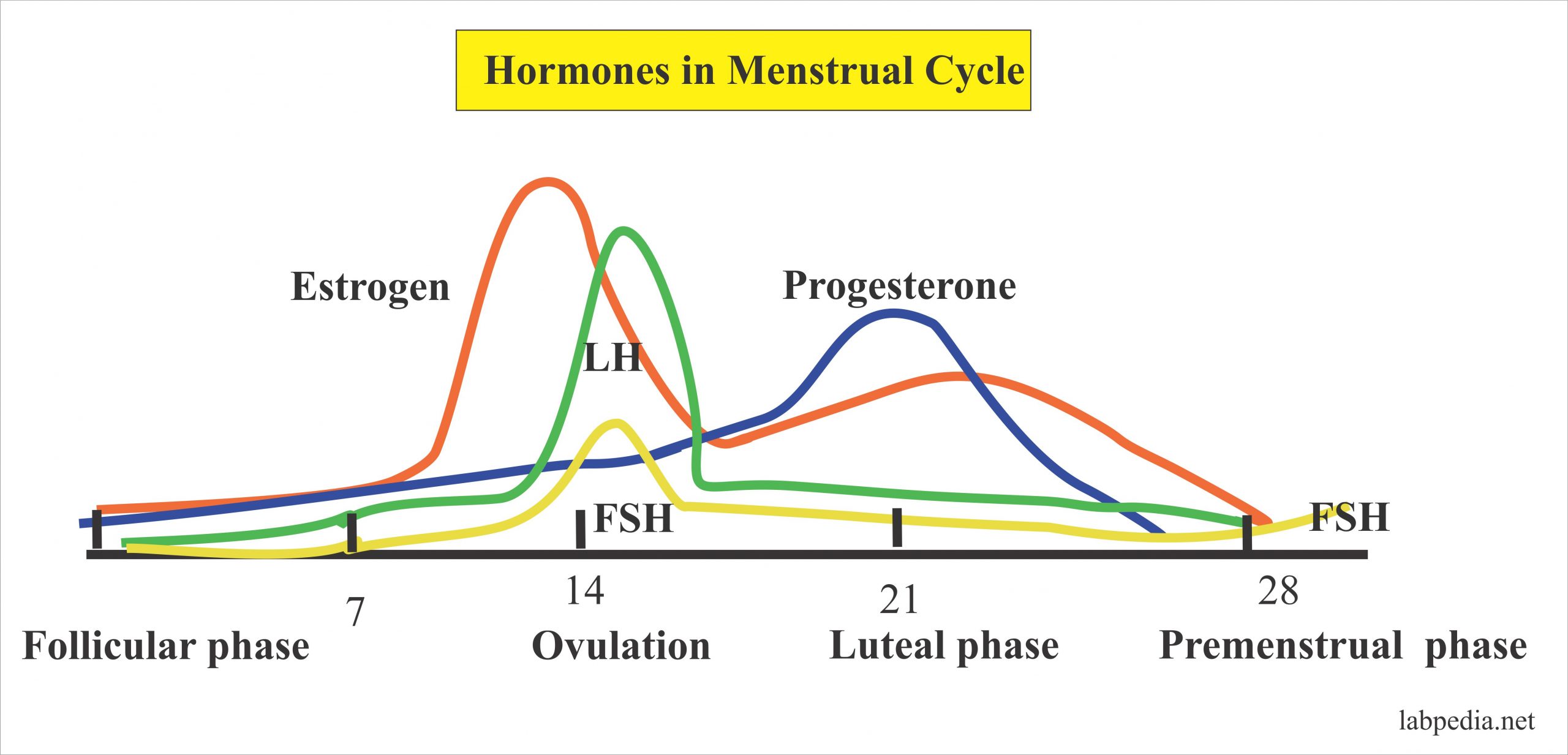
Fsh Levels Menopause Chart . Department of health and human services; (but since there’s not a universal standard, our range may not be comparable with your results from other labs.) test your fsh chart of fsh levels:
Follicle Stimulating Hormone (Fsh) (Follicular Stimulating Hormone), Follitropin - Labpedia.net from labpedia.net
Fsh levels indicate a woman's potential ability to become pregnant. Generally, normal fsh levels by age are considered to be the following (with measurements based on day 3 of a normal cycle): Prolactin inhibits the release of fsh and lh.
Follicle Stimulating Hormone (Fsh) (Follicular Stimulating Hormone), Follitropin - Labpedia.net
In the bottom chart you can see that her estrogen measurements are similarly irregular. But it doesn't diagnose either condition. A single raised fsh level (> 30 nmol/l) indicates a degree of ovarian insufficiency but the clinical picture of symptoms and menstrual pattern will vary for each individual woman. It is also the reason why gp’s do not test levels when you are over 45 years and show signs of perimenopause symptoms.
Source: www.gfmer.ch
This is why it is not reliable. If a female has an fsh level of 30 iu/l or higher and has not had a period for. (but since there’s not a universal standard, our range may not be comparable with your results from other labs.) test your fsh chart of fsh levels: This is particularly true in the years leading.
Source: www.scielosp.org
This is particularly true in the years leading up to menopause. ≥ 30 miu/ml) apart to confirm diagnosis. Fsh levels fluctuate from being at menopausal range, to being at reproductive age range. 9 the absolute levels of estrogen are influenced by weight, sex, and age. A single raised fsh level (> 30 nmol/l) indicates a degree of ovarian insufficiency but.
Source: www.cell.com
The test can show whether you have high fsh levels, a sign of menopause or perimenopause. As women progress through their lives, the sex hormones, especially estrogen, have a major impact, influencing changes that affect many organs and tissues. A woman’s reproductive years occur before menopause. Prolactin inhibits the release of fsh and lh. After taking the test, you should.
Source: www.omjournal.org
Hormone replacement is strongly advised in women with early menopause even without symptoms. A single raised fsh level (> 30 nmol/l) indicates a degree of ovarian insufficiency but the clinical picture of symptoms and menstrual pattern will vary for each individual woman. Burtis ca, ashwood er, bruns de,. Afcc states that fsh levels of 11 to 15 miu/ml indicate decreased.
Source: www.pinterest.com
Fewer investigations are recommended though: Increased prolactin levels can lead to very low fsh and lh values 1. This is particularly true in the years leading up to menopause. Prolactin inhibits the release of fsh and lh. As women progress through their lives, the sex hormones, especially estrogen, have a major impact, influencing changes that affect many organs and tissues.
Source: www.researchgate.net
Food and drug administration [internet]. This test does not detect menopause or perimenopause. Consequently, this is the reason why fsh test is an unreliable marker of menopause transition. Your doctor will discuss any significant abnormal results with you in relation to your symptoms and past. Because of the changes in estrogen production, the ratio of estradiol to estrone changes after.
Source: www.frontiersin.org
Of course, test results should be taken in context as to. Because of the changes in estrogen production, the ratio of estradiol to estrone changes after the menopause, with the estrone level exceeding that of estradiol. If a female has an fsh level of 30 iu/l or higher and has not had a period for. Follicular stimulating hormone (fsh) test.
Source: www.semanticscholar.org
Follicular stimulating hormone (fsh) test to diagnose menopause should only be done in women: Obese women have a higher concentration of free estradiol because of decreased sex. Fsh levels indicate a woman's potential ability to become pregnant. (but since there’s not a universal standard, our range may not be comparable with your results from other labs.) test your fsh chart.
Source: www.researchgate.net
Afcc states that fsh levels of 11 to 15 miu/ml indicate decreased egg reserve and a reduced chance of pregnancy, while levels of 20 miu/ml relate to a very low chance of pregnancy and live birth. Consequently, this is the reason why fsh test is an unreliable marker of menopause transition. 4 rows therefore, you may see fsh levels anywhere.
Source: labpedia.net
These tests will accurately detect fsh about 9 out of 10 times. Fsh and lh are both decreased in failure of the pituitary or hypothalamus. Prolactin inhibits the release of fsh and lh. ≥ 30 miu/ml) apart to confirm diagnosis. But it doesn't diagnose either condition.
Source: gennev.com
Because of the changes in estrogen production, the ratio of estradiol to estrone changes after the menopause, with the estrone level exceeding that of estradiol. Talk to your doctor about the meaning of your specific test result. But it doesn't diagnose either condition. As you grow older, your. Fewer investigations are recommended though:
Source: www.scielosp.org
Because of the changes in estrogen production, the ratio of estradiol to estrone changes after the menopause, with the estrone level exceeding that of estradiol. Afcc states that fsh levels of 11 to 15 miu/ml indicate decreased egg reserve and a reduced chance of pregnancy, while levels of 20 miu/ml relate to a very low chance of pregnancy and live.
Source: www.gfmer.ch
As women progress through their lives, the sex hormones, especially estrogen, have a major impact, influencing changes that affect many organs and tissues. This is why it is not reliable. 4 rows therefore, you may see fsh levels anywhere between 1.4 miu/ml to over 30 miu/ml. Your doctor will discuss any significant abnormal results with you in relation to your.
Source: www.pathophys.org
In the case of fsh, the standard reference range varies by lab. Understanding the menopause hormone levels chart. Follicular stimulating hormone (fsh) test to diagnose menopause should only be done in women: Fewer investigations are recommended though: 2 x fsh levels 4 to 6 weeks (menopausal levels:
Source: www.frontiersin.org
These tests will accurately detect fsh about 9 out of 10 times. Some labs use different measurements or test different samples. Consequently, this is the reason why fsh test is an unreliable marker of menopause transition. After taking the test, you should talk with your health care provider about the results. A single raised fsh level (> 30 nmol/l) indicates.
Source: health.usf.edu
4 rows higher fsh levels — levels of about 30 to 40 or above — are usually taken to signal. Consequently, this is the reason why fsh test is an unreliable marker of menopause transition. Some labs use different measurements or test different samples. It is also the reason why gp’s do not test levels when you are over 45.
Source: www.forthwithlife.co.uk
≥ 30 miu/ml) apart to confirm diagnosis. Some labs use different measurements or test different samples. Low fsh values can indicate an under function of the pituitary gland or hypothalamus. Talk to your doctor about the meaning of your specific test result. Fsh is a protein made by the brain that stimulates ovulation.
Source: www.straighthealthcare.com
A woman’s reproductive years occur before menopause. If the level is higher than 25, then the woman may be in the peri or premenopausal stage, while she is approaching menopause, if the level is around 50. Low fsh values can indicate an under function of the pituitary gland or hypothalamus. ≥ 30 miu/ml) apart to confirm diagnosis. As women progress.
Source: modernfertility.com
Many conditions can change fsh levels. Your doctor will discuss any significant abnormal results with you in relation to your symptoms and past. Increased prolactin levels can lead to very low fsh and lh values 1. Fsh levels fluctuate from being at menopausal range, to being at reproductive age range. Heres an fsh chart that may help.
Source: www.givf.com
It is also the reason why gp’s do not test levels when you are over 45 years and show signs of perimenopause symptoms. The test can show whether you have high fsh levels, a sign of menopause or perimenopause. Many conditions can change fsh levels. Fsh levels indicate a woman's potential ability to become pregnant. These tests will accurately detect.