What Age Do Kids Lose Teeth Chart . Usually, it starts around the age of 6 and ends around 13. And there are a lot more adult teeth than baby teeth, so a teeth chart can really help you keep track of their new pearly whites.
Canadian Dental Association from www.cda-adc.ca
The first tooth to fall out is usually located in the. Multimedia baby teeth diagram a child's baby teeth (primary teeth) typically begin to loosen and fall out to make room for permanent teeth at about age 6. Your child's teeth can fall out in any order, but baby teeth are often lost in the same order they arrived.
Canadian Dental Association
By the age of 12 to 14, most children have lost all their baby teeth and have their adult teeth. Your child's teeth can fall out in any order, but baby teeth are often lost in the same order they arrived. The last baby tooth is usually lost around the age of 12, and is the cuspid or second molar. It's also possible for a child to reach age 7 or 8 without losing any baby teeth.
Source: www.trianglepediatricdentistry.com
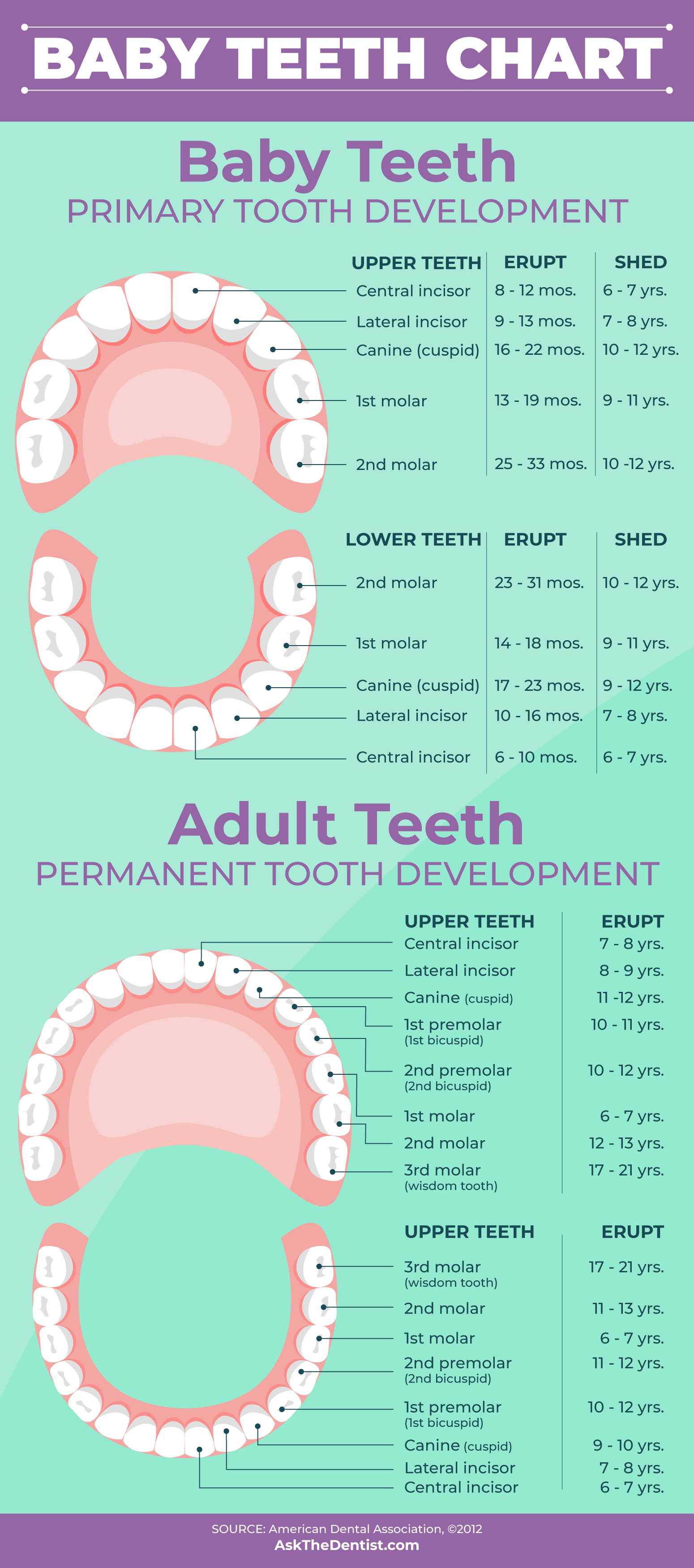
The middle teeth are usually the first to go (at 6 to 7 years), followed by the ones on either side (at 7 to 8 years). Your little one’s mouth will gradually become filled with these teeth up until the age of 3. Central incisors (two front teeth) — age 6 to 7 Remember that eruption times can vary from.
Source: www.keswickkidsdental.ca
Next, the top four front teeth emerge. Then, these primary teeth will begin falling out around the age of 6 to make way for your child’s adult teeth. When your child's baby teeth fall out varies from person to person. And the baby molars are usually lost between 10 and 12 years old.” while most kids lose their first tooth.
Source: askthedentist.com
When your child's baby teeth fall out varies from person to person. Usually, it starts around the age of 6 and ends around 13. Most kids have their first loose tooth at age 5 or 6, but it can happen when they’re as young as 4 or as old as 8. What is exfoliation of teeth? The first teeth to.
Source: discoverykidsdentistry.com
By the age of 12 to 14, most children have lost all their baby teeth and have their adult teeth. If you or your child notice anything strange or irregular about their baby teeth going out and adult teeth coming in, set up a time to have your dentist take a look. Most likely, the molars are the first teeth.
Source: www.lilteeth.com
Older adults, black adults, current smokers, and those with lower incomes and less education have fewer remaining teeth. And the baby molars are usually lost between 10 and 12 years old.” while most kids lose their first tooth between the ages of 5 and 6, keep in mind, there is wiggle room, so to speak, based on every individual child..
Source: www.pinterest.com
At what age should a child stop losing teeth. Well, it's probably your child's teeth you're charting, but you get the point. When your child's baby teeth fall out varies from person to person. According to the ada, we usually already have 20 primary or baby teeth at birth. Older adults, black adults, current smokers, and those with lower incomes.
Source: www.perfectteeth.com
Can teething be painful for babies or toddlers? For most children, their baby teeth begin to fall out around the age of 6. When a child has reached 3 years old there are usually 20 baby teeth present. There are 10 on the upper jaw (top teeth) and 10 on the lower jaw (bottom teeth). Then, the teeth fall out.
Source: www.mouthhealthy.org
From the age of about 6 years, baby teeth start to become 'wobbly' and fall out to make way for adult teeth. Then, the teeth fall out in the following order: Your little one’s mouth will gradually become filled with these teeth up until the age of 3. The first tooth to fall out is usually located in the. Girls.
Source: discoverykidsdentistry.com
There are 10 on the upper jaw (top teeth) and 10 on the lower jaw (bottom teeth). Then, the teeth fall out in the following order: Can teething be painful for babies or toddlers? The tooth will fall out when it. It's also possible for a child to reach age 7 or 8 without losing any baby teeth.
Source: brookhavenchildrensdentistry.com
Usually, the first two teeth to erupt are the two bottom central incisors (the two bottom front teeth). If your child begins to lose teeth before 4, consult a dentist to make sure there's no underlying problem. Well, it's probably your child's teeth you're charting, but you get the point. Most kids have their first loose tooth at age 5.
Source: www.cda-adc.ca
Usually, it starts around the age of 6 and ends around 13. Older adults, black adults, current smokers, and those with lower incomes and less education have fewer remaining teeth. Then, these primary teeth will begin falling out around the age of 6 to make way for your child’s adult teeth. If your child's baby teeth came in later than.
Source: www.nurturelife.com
Additionally, keep your child’s overall development in mind. Can teething be painful for babies or toddlers? This may lead to crooked teeth due to limited space (1). The final baby teeth to be shed are the second molars. What is exfoliation of teeth?
Source: www.stanfordchildrens.org
The last 4 of these, called wisdom teeth, usually emerge later than the others, generally. For most children, their baby teeth begin to fall out around the age of 6. Next, the top four front teeth emerge. Most kids have their first loose tooth at age 5 or 6, but it can happen when they’re as young as 4 or.
Source: www.kidsdentalonline.com
Usually, the first two teeth to erupt are the two bottom central incisors (the two bottom front teeth). From the age of about 6 years, baby teeth start to become 'wobbly' and fall out to make way for adult teeth. It’s important to know what to. The first teeth to be lost are usually the central incisors. Number of teeth.
Source: www.anchoragepediatricdentistry.com
If your child begins to lose teeth before 4, consult a dentist to make sure there's no underlying problem. Around age 5 or 6 your child starts losing baby teeth and adult teeth grow in. Most likely, the molars are the first teeth to break through and you can expect the last baby tooth to fall out around 12 years.
Source: friscokidsdds.com
Up to the age of 6 years, these teeth remain firmly in place, but then tooth loss starts to take place. And there are a lot more adult teeth than baby teeth, so a teeth chart can really help you keep track of their new pearly whites. From the age of about 6 years, baby teeth start to become 'wobbly'.
Source: www.stlouisbraces.com
As your child’s adult teeth are erupting, the baby teeth will fall out and become replaced. The last baby tooth is usually lost around the age of 12, and is the cuspid or second molar. Then, the teeth fall out in the following order: Number of teeth remaining ( table 1) adults age 20 to 64 have an average of.
Source: childrenswi.org
Some children lose their first tooth as early as 4 or as late as 7. Can teething be painful for babies or toddlers? According to the ada, we usually already have 20 primary or baby teeth at birth. Central incisors (two front teeth) — age 6 to 7 What age do.kids start losing teeth.
Source: raisingchildren.net.au
The last baby tooth is usually lost around the age of 12, and is the cuspid or second molar. Between six and 13 years of age, children lose all 20 primary teeth to be replaced by permanent teeth. The tooth will fall out when it. Well, it's probably your child's teeth you're charting, but you get the point. At what.
Source: www.care.com
At what age should a child stop losing teeth. And the baby molars are usually lost between 10 and 12 years old.” while most kids lose their first tooth between the ages of 5 and 6, keep in mind, there is wiggle room, so to speak, based on every individual child. Usually, the first two teeth to erupt are the.