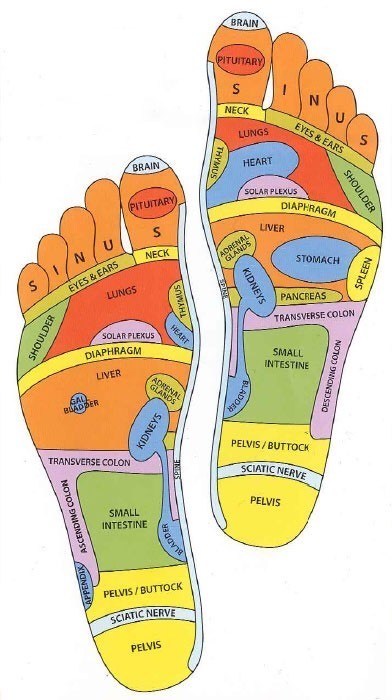
Reflexology Chart Right Foot . Foot reflexology is an ancient practice that aims to improve medical conditions by using specific pressure on your feet. The right feet connects to the right side organs of the body i.e.
Diy Foot Reflexology: How To Use It For Better Sleep from www.mindbodygreen.com
Risks associated with foot reflexology. The left foot is associated. A reflexology foot chart is a popular tool used in medicine to identify foot reflexology points.
Diy Foot Reflexology: How To Use It For Better Sleep
The basic reflexology foot chart includes the whole body. “foot reflexology is a therapeutic massage with sustained pressure instead of broad strokes, like a classic massage,” explains martinez. Here’s a more basic rundown that may help you better understand which pressure points do what: The point on your right foot corresponds to your right knee and the point on your left foot is for your left knee.
Source: www.wellandgood.com
Right to the individual foot to agree with a specific toe. On each side, there is five parts that the energy of the body is said to flow. The basic reflexology foot chart includes the whole body. Simply click on the picture on the right. This chart specifies the body organs clearly.
Source: www.healthline.com
Here’s a more basic rundown that may help you better understand which pressure points do what: And this chart is presented with a diagram or graphical data along with labels for both the left foot and the right foot. If you manipulate the feet just right, you should feel better in no time. A foot reflexology chart is designed as.
Source: www.how-to-do-reflexology.com
The scientific community at large doesn’t always agree with the benefits of acupressure and reflexology, but they do agree that it can have a therapeutic effect on blood flow, lymph flow , and stress levels. “fine detail and pressure are applied to specific. Risks associated with foot reflexology. Refer to the reflexology chart about to locate the correct pressure point..
Source: www.purewow.com
The left foot will stimulate the left side of the body and all. Simply click on the picture on the right. I’m a full time mom so i promise that you won’t get tons of email from me as i’m much too busy looking after my toddler. The thinnest part of your foot is called the waistline. A foot reflexology.
Source: www.acupressurewellness.com
The physical act of applying specific pressu對res using the thumb, finger and hand techniques result in stress reduction which causes a physiological change in. Share on twitter share on facebook share on email share on whatsapp share on sms. Right to the individual foot to agree with a specific toe. (begin on the right hand/ foot with thumb along to.
Source: www.drozshow.com
See the vital energy in action: Chart, map, points, and techniques. Apply pressure using a thumb crawling motion and. Is ear piercing bad for the vital energy?. In addition, you must also keep in mind that the right foot is connected to the right side of the body while the left one is linked to the left side.
Source: www.researchgate.net
See the vital energy in action: Right ear, right eyes and right lung where the left feet connects to the left side organs of the body. The right feet connects to the right side organs of the body i.e. The left foot is associated with, you guessed it, the left side of the body. A reflexology foot chart is a.
Source: www.mindbodygreen.com
A reflexology foot chart is a popular tool used in medicine to identify foot reflexology points. Reflexology is practiced all over the world. Refer to the reflexology chart about to locate the correct pressure point. Here’s a more basic rundown that may help you better understand which pressure points do what: Here are the body parts that have reflex points.
Source: depositphotos.com
In the previous article, we already listed all the benefits of foot reflexology in great detail. The left foot is associated with, you guessed it, the left side of the body. In addition, you must also keep in mind that the right foot is connected to the right side of the body while the left one is linked to the.
Source: www.foot-pain-explored.com
Here’s a more basic rundown that may help you better understand which pressure points do what: There are many different foot reflexology charts that show where the reflexes are for every part of the body. Share on twitter share on facebook share on email share on whatsapp share on sms. And foot reflexology can target the right nerve endings that.
Source: templatelab.com
Risks associated with foot reflexology. The left foot will stimulate the left side of the body and all. Three transverse lines were later presented, isolating the body evenly just as vertically. These is where the pituitary gland brain stemtailbone and sciatic nerve and others are located in our body as shown on the picture below. If you manipulate the feet.
Source: anhs-school.com
Risks associated with foot reflexology. (begin on the right hand/ foot with thumb along to little finger, repeat on left hand/ foot), and gently rotate all the joints on each finger or toe (begin on the right hand/ foot with thumb along. This chart specifies the body organs clearly. Simply click on the picture on the right. Three transverse lines.
Source: www.anatomynote.com
Foot reflexology charts are important if you are still a beginner at. The left foot is associated. Do reflexology to the whole of both feet. She came up with her own foot and hand reflexology charts and details the zones and the areas of the body it connects to. Here are the body parts that have reflex points in your.
Source: www.pinterest.com
Moving from the ground up, the bottom of your foot is connected to your pelvic. Though there are so many pressure points on your foot (as the above foot reflexology chart proves), here's the basic gist of things: Another point to remember is the reflex points on the right hand corresponds to the left side of the body and vice.
Source: templatelab.com
This chart specifies the body organs clearly. And this chart is presented with a diagram or graphical data along with labels for both the left foot and the right foot. Reflexology providing reflexology pineal/hypothalamus pituitary side of neck neck parathyroid thyroid thymus helper to thyroid heart diaphragm stomach/pancreas adrenal duodenum ureter small intestine. Additionally, keep in mind that the right.
Source: www.powerofpositivity.com
Likewise, reflexology charts of the right foot correspond to the right side of the body. Here’s a more basic rundown that may help you better understand which pressure points do what: Apply pressure using a thumb crawling motion and. Here are the body parts that have reflex points in your foot: Some specific reflexes area such as , head ,eye,ear.
Source: www.shutterstock.com
You’ll get free online lessons as well as the reflexology charts. A foot reflexology chart is designed as a map of the spots you need to. This chart specifies the body organs clearly. Chart, map, points, and techniques. This means you have to.
Source: stock.adobe.com
Foot reflexology charts & maps #1. Foot reflexology charts are important if you are still a beginner at. Since reflexology is practiced across the world, there’s no general agreement on the locations of the specific reflexology points on the human body, including the feet. Risks associated with foot reflexology. Although it is like a massage, its principles are entirely different.
Source: www.pinterest.com
Foot reflexology is an ancient practice that aims to improve medical conditions by using specific pressure on your feet. There are many different foot reflexology charts that show where the reflexes are for every part of the body. Simply click on the picture on the right. In the previous article, we already listed all the benefits of foot reflexology in.
Source: templatelab.com
The basic reflexology foot chart includes the whole body. Apply pressure using a thumb crawling motion and. The left foot is associated with, you guessed it, the left side of the body. I also promise to keep your email address confidential and to only send you messages. “foot reflexology is a therapeutic massage with sustained pressure instead of broad strokes,.